
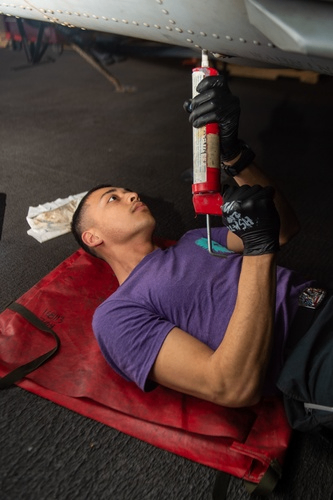
RTV Silicone Sealants Explained: When to Use RTV3145, RTV730, and RTV732
Introduction to RTV Silicone Sealants
One of the most widely used sealants in aircraft maintenance is RTV silicone, along with thermal vulcanizing sealants and gasket makers. These are commonly referred to as ‘RTV,’ and while there are no one-size-fits-all RTVs, there is a wide array of sealants that work on all kinds of mechanical and industrial applications.
RTV silicone sealant is used in aviation, electronics, and industrial maintenance because it’s a durable, flexible seal where others fail. Unlike rigid adhesives or gaskets, RTV silicone cures at room temperature and remains elastic, so it can absorb vibration, shock, and thermal movement without cracking or discoloring over time.
RTV silicone sealants are specified for sealing electrical connections, protecting components from moisture, and filling irregular shapes where traditional gaskets or caulk can’t conform. They bond to metals, glass, plastics, porcelain, and wood, and are suitable for both interior and exterior applications exposed to harsh conditions, oils, fuels, solvents, ozone, and extreme temperatures.
Ready to buy now? Use our convenient matrix below to order the right RTV for you mission!
What Is RTV Silicone Sealant Used For?
RTV silicone sealant is used for sealing, bonding, and environmental protection, not for structural load-bearing. In aviation and industrial applications, it is used to:
- Seal electrical connections and contact points
- Protect components from moisture, water, and ozone exposure
- Fill gaps around irregular shapes and assemblies
- Provide vibration and shock resistance
- As a non-structural silicone adhesive where flexibility is required
Because RTV silicone has high viscosity and cures into a strong yet elastic material, it works well in applications involving movement, thermal cycling, or chemical exposure.
What Is the Difference Between RTV and Silicone Sealant?
The terms are often used interchangeably, but they are not the same.
Silicone sealant is a broad category that includes many curing methods and chemistries.
RTV silicone specifically refers to silicone products that cure at room temperature without external heat.
In short:
- All RTV silicone sealants are silicone sealants
- Not all silicone sealants are RTV
RTV products are preferred when controlled curing, flexibility, and field application are required.
What Are the Different Types of RTV Silicone Sealant?
Beyond basic RTV silicone, manufacturers offer different families that are tailored for specific conditions and uses:
What Is Dow 732 Multi-Purpose Sealant Used For?
Dowseal 732 Multipurpose Sealant is a common one-part acetoxy-cure or RTV that is used for general industrial sealing and bonding. It extrudes as a non-slump paste, it cures at room temperature with ambient moisture, and it forms a flexible rubber that adheres very well to glass, metal, ceramics, and plastics.
It is typically used in sealing panels, housing, and access covers where moisture resistance and a flexible bead are required, and in bonding components that experience vibration or thermal movement but do not require structural rigidity.
Dowsil 732 remains flexible from roughly -60°C to 180°C in its standard grades, and black versions are rated for continuous service up to 205°C, with brief spikes to even higher temperatures.
DOWSIL 732 Cure and Food Contact
At 25°C and 50% relative humidity, Dowsil 732 skins in 5 to 10 minutes and becomes tack-free in 20 to 45 minutes. It cures fully about ⅛” deep in 24 hours. Deeper beads, confined joints, or low humidity slow the curing process, requiring several days for full cross-linking. If you live in an extremely arid climate (e.g., West Texas, Arizona, Southern California), make sure to allow ample time for the curing process.
What Is RTV 3145 Used For?
RTV 3145 is commonly used where industrial-grade sealing and light adhesive properties are required. It provides strong adhesion, chemical resistance, and durability in environments exposed to oils, fuels, solvents, and moisture.
Typical applications include:
- Sealing electrical and electronic components
- Environmental protection for assemblies
- Bonding where flexibility is required but structural strength is not

DOWSIL 3145 Gray and Cure
DOWSIL 3145 Gray is a pigment inversion of the same 3145 RTV, which is MIL-A-46146 compliant. It is supplied as a non-flowing, room-temperature-cure adhesive and sealant. Gray is widely used on military airframes because it blends in with paint schemes.
At 25°C, RTV 3145 reaches tack-free in around an hour, then continues to cure inward as moisture diffuses into the bead, much like the other RTVs. Thicker sections and confined geometries will need more time, sometimes several days, for a full depth cure. Mild heat below 60°C can be used to accelerate processing if it's compatible with the assembly substrates.
When Should You Not Use RTV Sealant?
RTV silicone is a flexible sealant and a light adhesive, but it is not a structural-grade sealant or an epoxy. It's not designed for mechanical, chemical, or other rigid bonding applications.
You should avoid it when:
1. Structural load transfer, precise joint stiffness, or high peel or shear strength is mandated.
2. Surfaces must be painted later on, and the paint system does not adhere to a cured silicone. Always check the specs on your paint.
3. The joint cannot tolerate any silicone contamination (i.e., paint booths, certain optical or bonding processes).
4. The substrates are low surface energy plastics like fluoropolymers or unmodified polyolefins without primary surface treatment.
How to Choose the Right Silicone Sealant
To select an RTV silicone, check these few guidelines as a general rule of thumb:
1. Confirm the temperature range versus your operating and peak temperatures on your application.
2. Check the chemical exposure (water, oils, fuels, solvents, and so on), and use an RTV grade that is rated for these conditions.
3. Choose cure chemistry based on metal sensitivity, odor, and electronics compatibility.
4. Make sure to check for outgassing requirements on optics, closed electronics, and vacuum services.
5. Select a color for inspection contrast or aesthetics, and verify the cure time against bead thickness and production cycles.
Sourcing RTV silicone sealants via Greenwood Aerospace
Sourcing aircraft-grade consumable and expendable products for maintenance operations in the military and federal government shouldn't be that difficult: you determine your needs, and you order them. At least that's how it ought to work, but that's not how it really does work. You have to meet certain contracting criteria, meet bids, source from multiple vendors, and so on, all within the complex landscape of defense and military procurement. We can't help you much with those things, but we can make sourcing them much easier by using GSA Advantage to obtain the consumable products you need for your aircraft maintenance operations.
Greenwood Aerospace is on the GSA contract schedule for aviation and aerospace because it is one of the best ways to serve our client base when you're in military maintenance, supply, and parts procurement. Time is always against you. Sourcing 10 different quotes and talking to 10 different vendors is honestly a ridiculous waste of time.
On GSA Advantage, you can filter for the exact criteria you need to follow (HUBZone, small business, minority-owned, Native American-owned, etc.). It brings up the contractors who can provide these. You have a list right in front of you, and there's no haggling. The price is fixed.
.svg)


.jpg)


