Understanding MIL-SPEC Corrosion Preventive Compounds for Aircraft Maintenance and Federal Procurement
This article is part of Greenwood Aerospace’s Ultimate Guide to Zip Chem Corrosion Preventatives and Aviation Cleaners, a content series focused on helping maintainers, procurement officers, and federal buyers understand the specifications and performance standards of aviation chemicals available through GSA Advantage.
A Primer on Corrosion Prevention
Corrosion is a death blow to aircraft. Of all the environmental maladies that can and do occur to aircraft, corrosion is the most dangerous. It affects the skin, sub-section underneath the skin, high-stress areas like wing boxes and other high-stress, high-load areas, landing gear systems, and even control linkages, cables, and piano hinges.
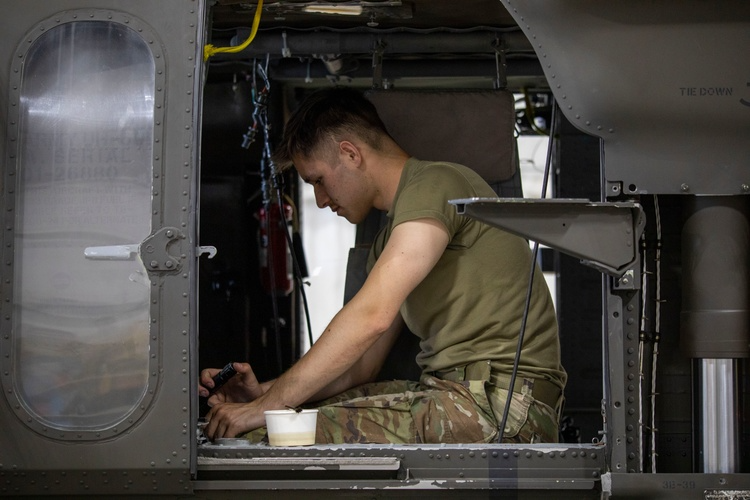
Every exposed metal surface is vulnerable to the combined effects of oxygen, moisture, and contaminants, including salts, acids, and even industrial pollutants. In the life of an aircraft, where airframes experience constant fluctuations in temperature, humidity, and other moisture-related exposures, corrosion will shorten the service life of the aircraft and its associated components.
Corrosion inhibitors and corrosion-preventive compounds (CPCs) interrupt this destructive cycle by forming a barrier that prevents corrosive agents from reacting with metal. These compounds are indispensable to both military and civilian maintenance programs, ensuring that equipment stays mission-ready and compliant with FAA and DoD requirements.
Types of Corrosion Prevention Methods
All metallic surfaces are prone to corrosion, including rust. Corrosion preventative measures that are common include:
- Barrier coatings
- Water-displacing compounds
- Corrosion inhibitors neutralize oxidation before it begins
In the world of aircraft maintenance, coatings and CPCs are applied to aluminum, soft steel, and other metallic surfaces to seal out air, moisture, and other particulates.
There are a few different methods of application: soft-film compounds, dry-film coatings, and waxy preservative compounds, specifically formulated for modern aircraft designs, both civil and military.
Understanding MIL-Spec Corrosion Preventive Compounds
When a product has a MIL-Spec designation, like MIL-PRF-16173 or MIL-C-16173, it means the material has been tested and approved to meet a government spec. These specs cover everything from viscosity and corrosion-resistance to film characteristics and storage stability. MIL-Spec corrosion preventive compounds come in several grades and classes that describe the film’s consistency: dry, soft, or waxy.
Grade 2, Class I and II are the most commonly used for aircraft because they balance long-term protection with easy removal during inspection or overhaul. These CPCs are both barrier coatings and water displacers, forming a uniform film that prevents oxygen and moisture from contacting the metal surface. Typical uses are for preserving aircraft parts, tools, and instruments during shipment or long-term storage.
Typical applications include storage, shipment, and general-purpose preservation of aircraft parts, tools, and instruments.
Zip Chem MIL-Spec Products: Cor-Ban and Beyond
Zip-Chem specializes in manufacturing corrosion preventative compounds that meet or exceed MIL-SPECs. Cor-Ban 27L is a long-term, liquid CPC formulated for both interior and exterior use. It provides excellent protection in humid, salt-rich, and tropical environments.
Cor-Ban 27L is ideal for extended storage or long service intervals, while Cor-Ban 35 is a cold-applied aerosol CPC for quick field applications or AOG repairs.
Finally, MIL-PRF-16173 Grade 2 CPC provides maintainers with liquid protection for structural areas, hardware, and depot-level maintenance activities. Each of these products has been formulated to meet the high-performance and safety requirements of civil and military aviation maintenance.
Application and Best Practices
To get maximum protection, MIL-Spec CPCs must be applied correctly. All exposed areas should be cleaned and dried with approved products like CALLA 301A or CALLA 855 to remove grease, dirt, and carbon deposits.
Once the surface is clean, the CPC can be applied by aerosol spray, brush, or immersion, depending on the part size and packaging: quarts, gallons, or aerosol cans. Common areas of application are landing-gear bays, wheel wells, hinges, control linkages, cables, and undercarriage assemblies.
Maintenance personnel should follow MIL-PRF inspection intervals for reapplication, especially after heavy water exposure or de-icing. Proper technique ensures the compound forms a continuous film that won’t crack, chip, or migrate under heat and vibration.
Procurement and Compliance for Government Buyers
It is extremely important to source chemicals, sealants, lubricants, and oils through approved channels from spec-compliant manufacturers. If these are purchased outside of approved channels, which are thoroughly vetted, you run the risk of receiving non-compliant or even diluted substitutes, which is a no-go.
Greenwood Aerospace gives you peace of mind by supplying only fully verified and vetted materials, sourced straight from the manufacturer, so when you buy from us, you get the real deal.
Also, we have streamlined the process by providing the full product catalog on GSA Advantage. All qualified buyers can simply click the links in this article and go straight to the product, which you can easily purchase with a government purchase card: no hassle, no haggling, no red tape.
Parting Thoughts: Trust Verified MIL-Spec CPCs for Mission-Ready Protection
For years, MIL-SPEC corrosion preventive compounds have been the standard for protecting military and aerospace assets from corrosion. Engineered to meet DoD specs and withstand extreme environments, Zip Chem products, such as Cor-Ban 27L, provide long-lasting, verifiable protection for metal parts and aircraft structures. Procurement officers can buy all Zip Chem CPCs through Greenwood Aerospace on GSA Advantage.
Email → gsasales@greenwood.aero
Call → 580-865-6000 or 833-GSA-EBUY (833-472-3289)
This is a part of Greenwood Aerospace’s Zip Chem series. For related topics, including surface preparation and corrosion inhibitors, check out our Ultimate Guide to Zip Chem Corrosion Preventatives and Aviation Cleaners.
.svg)