
MIL-PRF-85285 Topcoat Buying Guide: QPL Compliance and GSA Procurement Strategy
This series of articles focuses on the MIL-PRF-85285 topcoat series. Greenwood Aerospace is your preferred federal government procurement professional and supplier of top coats, sealants, adhesives, and many other aviation-grade consumables for your maintenance operations.
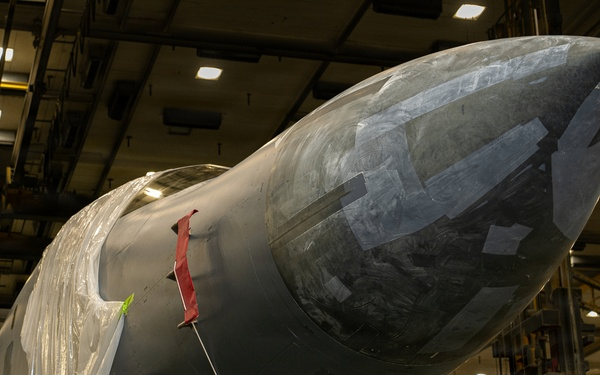
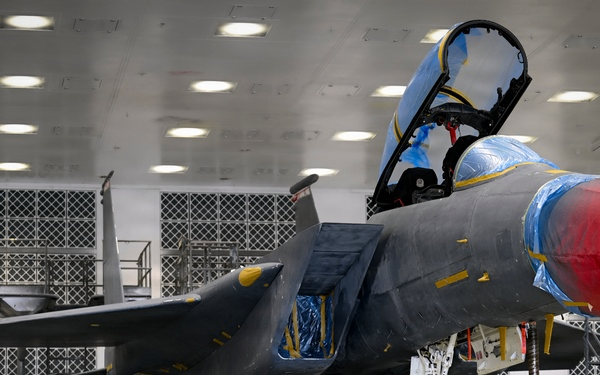
MIL-PRF-85285F is the Department of Defense Performance Specification that governs aircraft and support equipment top coats. Top coats, of course, are the final layer applied over a prepared, primed, and painted surface. And the top coat is the final. This is far more than just an optional item for appearance. The top coat is absolutely critical for corrosion resistance.
This guide and our entire series break down the specification from the buyer's perspective. If you are a contracting officer, maintenance leader, DLA supply specialist, or a paint facility manager at any level, this article will help you avoid ordering errors, understand the type class and grade differences in top coats, verify QPL eligibility, understand VOC and other environmental compliance, and source and procure MIL-PRF-85285 top coats through appropriate channels.
SECTION I: Understanding MIL-PRF-85285F Directly From the Specification
(This section is based on MIL-PRF-85285F, 16 May 2022)
MIL-PRF-85285F, which is dated 16 May 2022, is the formal technical guidance used for aircraft top coats that are used in the military. It defines aerospace top coats with maximum limits for volatile organic compounds and volatile organic hazardous air pollutants.
These coatings are furnished in single- or multi-componement kits and must meet strict qualification requirements to be eligible for federal contract awards.
Type, Class, Form, and Grade: What Federal Buyers Must Specify
One of the biggest hurdles in military and federal procurement is the need to meet limitations. Things that work well in commercial applications may not be approved for federal or military procurement. Here are the MIL-PRF standards that are mandatory.
Type (Application & VOC Limits)
Four types of topcoats are specified in the MIL-PRF-85285F:
Type I – Aircraft (420 g/L VOC)
For aircraft weapons systems and general aircraft use.
Type II – Support equipment (340 g/L VOC)
For non-flight support equipment.
Type III – Aircraft and support equipment (50 g/L VOC)
Ultra-low VOC for highly regulated emissions environments.
Type IV – Aircraft with extended weatherability (420 g/L VOC)
For aircraft weapons systems that require extended weather resistance.
The key consideration in government and military procurement of these Topcoat products is weathering performance.
• Types 1, 2, and 3 offer 500 hours of Xenon arc exposure
• Type 4 offers 3000 hours of Xenon arc exposure
Type 4 is a direct replacement for Type 1 when extended durability is required. This is particularly relevant for high-UV-exposure platforms such as maritime aviation and long-cycle repaints.

Class (Isocyanate & Waterborne Distinctions)
Taken from Section 1.2.2 of MIL-PRF-85285F, we find CLAS, which includes distinctions between isocyanate and waterborne. The specification divides coatings into four distinct classes:
• Class H is high solids formulations that contain isocyanates
• Class NH is a high solids formulation without isocyanates
• Class W is a waterborne formulation that contains isocyanates
• Class NW is a waterborne formulation without isocyanates
This distinction directly affects OSHA compliance requirements, ventilation capabilities in paint facilities, restrictions on naval health hazard assessments, PPE policies and requirements, and environmental emission controls.
Form (Kit Configuration)
Regarding kit configurations, MIL-PRF-85285 coatings are available in kit form. Form S is a single-component, while Form M is a multi-component, either two- or three-part system. Form M kits include:
• Component A, which is a pigmented resin
• Component B, which is a curing agent
• Optional Component C, which is a solvent
For the sake of procurement, you have to make sure that you follow these common practices:
1. Shelf life management (they do have a shelf life)
2. Mixing ratio control (because of their advertised strength and durability, the mixing ratio has to be exact)
3. Batch traceability (in case there are problems)
4. Prevention of component cross-mixing (the specification explicitly prohibits mixing components from different vendors or kits). Doing so will create non-conforming material and may result in contract rejection.
Grade (Hydraulic Fluid Resistance)
Section 1.2.4 discusses Hydraulic Fluid Resistance to top coats. Hydraulic fluid is extremely flammable and highly caustic, and is used in large quantities on most military and commercial aircraft. It also has a propensity to leak. So, the top coat's resistance to hydraulic fluids is very important. Two grades are defined in the MIL-PRF. Grade N is not resistant to phosphate ester hydraulic fluid, while Grade P is resistant to phosphate ester hydraulic fluid. Grade P coatings must pass a 30-day immersion test in phosphate-ester hydraulic fluid conforming to SAE AS 1241.
Opting for Grade N when phosphate ester exposure is expected can lead to premature coating failure, so choose the appropriate grade based on your aircraft's hydraulic fluid type.
VOC and VOHAP Limits: Environmental Compliance Requirements
Moving on to environmental compliance.
VOC Limits
- Type I & IV – 420 g/L
- Type II – 340 g/L
- Type III – 50 g/L
These parameters cannot be exceeded during thinning or reduction.
For Class H and NH coatings, thinning must use materials that meet MIL-DTL-81772. Exceeding VOC limits during application will make a coating non-compliant.
VOHAP Limits
The spec has VOHAP limits by Type, Class, and finish.
- Class NH and NW – 0.0 VOHAP
- Class H coatings have numeric limits by color and finish
This affects:
- CONUS emissions compliance
- California and other states' environmental regulations
- Depot reporting requirements
- Air permitting
Qualification and QPL Requirements
Qualifications are among the most important aspects of procurement under MIL-PRF-85285F. This specification requires that products be authorized for listing on.
From Sections 3.1 and 6.5:
- Products must be listed on QPL-85285
- Only QPL products are eligible for contract award
- Manufacturers cannot advertise compliance unless authorized on QPL
- No commercial equivalent meets the full combination of performance requirements
For military buyers, this means that you have to verify its QPL listing before a word. Avoid commercial equivalents that claim similarity and confirm your batch traceability. QPL compliance is not optional; it's mandatory for all contract eligibility.
SECTION II: Performance Requirements That Drive Procurement Decisions
As the name indicates, MIL-PRF is the set of standards that dictate performance requirements, and those requirements drive procurement.
Mechanical and Adhesion Requirements
Fully cured topcoats must meet specific performance requirements to be MIL-PRF-85285.
- Adhesion rating ≥ 4A (ASTM D3359 tape test)
- Impact flexibility per ASTM D6905
- Low-temperature flexibility at –51°C (Types I, III, IV)
- Dry-film thickness 1.7–2.3 mil
These are for structural flexing and thermal stress.
Fluid and Chemical Resistance Standards
Topcoat must be able to withstand immersion in:
- Turbine oil (MIL-PRF-23699)
- Hydraulic fluid (MIL-PRF-83282)
- JP-5 fuel (MIL-DTL-5624)
Grade P must survive 30 days in phosphate ester hydraulic fluid without hardness loss.
These are not cosmetic standards: they are operational survivability.
Weatherability and Durability Requirements
For Types I–III:
- 500-hour Xenon arc exposure
For Type IV:
- 3,000-hour Xenon arc exposure
Additional requirements:
- ΔE color shift ≤ 1.0
- Gloss retention minimums
- Humidity resistance at 100% relative humidity
- Heat resistance with minimal color change
These standards are in place to ensure technical teams know their aircraft will retain corrosion protection and visual identification throughout the extended service life cycle of the topcoat and paint. Paint is expected to last between depot-level maintenance intervals, which are typically every 6 to 7 years.
Application, Mixing, and Labeling Requirements
The Application, Mixing and Labeling section of MIL-PRF-85285 provides strict guidance on mixing sequence and ratios, pot life (which is 4-5 hours depending on viscosity levels, thinning limitations, and spray application methods, whether they're conventional, airless, HVLP, or electrostatic for Class H and NH).
Each container is required to include:
• Specification number
• MIL-PRF 85285F
• Type
• Class
• Form
• Grade
• SAE AMS-STD-595 color designation
• Manufacturer name and batch number
• Date of manufacture and expiration
• VOC and VOHAP content
SECTION III: Acquisition Strategy for MIL-PRF-85285
Now, let’s take a good, long look at the problems that frequently crop up for military sourcing strategists and procurement professionals.
Common Federal Procurement Pitfalls
Even the most experienced buyers can make mistakes when they're ordering consumables. Some of the more common mistakes include:
• Selecting type II instead of type I for aircraft applications
• Ordering grade where phosphate ester resistance is required
• Failing to verify a QPL listing
• Ignoring VOC limits during the thinning process
• Overlooking shelf life in lawn cycle programs
• Mixing components from different kits and different brands
• Purchasing non-authorized substitutes
Make sure to check your hydraulic fluid type in the aircraft in question. These errors will result in contract rejections, reworks, coding failures, audit findings, and even removal from the QPL, so make sure to check all of these first.

Packaging, Shelf Life, and Storage Stability
Taken from Section 3.5.2 of the MIL-PRF. This specification requires:
• A one-year shelf life for standard kits
• Six months for kits under 120 milliliters
• Storage temperature range of 35°F to 115°F
Accelerated storage stability testing is required to guarantee long-term viability. For federal programs purchasing palletized quantities, shelf-life tracking and batch rotation are highly recommended risk controls.
How to Procure MIL-PRF-85285 Through GSA Advantage
Procuring topcoats on GSA Advantage is not just a convenience factor. It's a risk mitigation strategy for military and federal buyers. Since this specification requires QPL qualifications, strict type-class grade identification, and VOC/VOHP compliance verification, using an established federal contract vehicle helps eliminate avoidable pitfalls in the acquisition process.
Contract Vehicle Advantages
GSA Advantage streamlines acquisition by providing pre-negotiated contract pricing, a FAR-compliant purchasing framework, reduced administrative burdens, audit-ready procurement, and simplified ordering for DoD buyers.
For programs operating under tight deliverable schedules, such as aircraft return-to-service deadlines, fleet maintenance events, and so on, reducing procurement friction is essential.
Pricing Transparency
From the perspective of the pricing procurement professional in the federal government and the Department of Defense, getting transparent pricing is a real stumbling block. GSA Advantage allows contracting officers and supply personnel to directly compare compliant products and validate cost reasonableness because prices are listed. It also supports price justification documentation because it is a known quantity and requires no additional negotiation.
When dealing with regulated coatings tied to military performance specifications, pricing is provided with clarity for commercial equivalent materials and approved products.
Why Greenwood Aerospace Is a Strategic Procurement Partner
When procuring any consumables for your aircraft, including top coats, compliance failures do not result in cosmetic inconvenience. They result in an operational disruption. Community Aerospace positions compliance sourcing as a form of mission assurance for your team.
AS9120B Quality Management System
Greenwood Aerospace operates under an AS9120B certified quality management system. This means control document management, verified supply qualifications, traceable receiving, corrective action processes, and continuous quality oversight. When sourcing aircraft coatings governed by performance specs, quality system maturity matters.
ITAR Compliance
Many aerospace programs operate under the International Traffic in Arms Regulations (ITAR). Greenwood Aerospace maintains ITAR compliance controls to support the secure handling of defense-related materials, compliance with controlled export requirements, and the restriction of distribution. For programs involving sensitive aircraft platforms or weapon systems, controlled sourcing channels reduce compliance-related exposure.
HUBZone small business status
Greenwood Aerospace is a HUBZone-certified small business that supports:
• Small business participation goals
• Socio-economic contracting requirements
• Federal agency small business utilization objectives
For contracting officers who need technical compliance but also have certain contracting restrictions, this is a great alignment to support acquisition.
Bulk & Palletized Deliverables
It is not uncommon for large-scale aviation repaint programs, whether at the wing level or all the way up to a depot-level maintenance program, to require multi-kit orders, palletized shipments, coordinated delivery windows, and scheduling alignment with the depot maintenance flow.
Greenwood Aerospace supports bulk and palletized fulfillment and aligns your logistics chain to the maintenance schedules. We do this so that you know that your operational disruptions will be kept to a minimum.
Featured Topcoat Products
Here are our featured products for MIL-PRF-85285 topcoats:
Final Federal Buyer Checklist
We recommend you use the following matrix to make sure this is the right fit for your operation.
U.S. Department of State ITAR-registered and AS9120B-certified, Greenwood Aerospace delivers compliant sourcing solutions for defense and government export programs.
GSA Schedule Contract: 47QSMS25D00B8
Contact us for product information, volume pricing, or rush orders:
gsasales@greenwood.aero | 580-865-6000 | 833-472-3289 (833-GSA-EBUY)
.svg)
.jpg)


