.webp)
How Corrosion Preventive Compounds Protect Aircraft Structures
An Introduction to Zip-Chem CPCs
Corrosion is the silent killer of aircraft structures. It is always lurking right on the surface or just under it, and sometimes deep within the aircraft's structure, and it will eventually kill the plane.
All aircraft are routinely exposed to the harshest mix of moisture, salts, extreme temperature swings, and chemicals that promote corrosion and prematurely degrade the aircraft's structure. Corrosion Preventive Compounds (CPCs) are specially formulated coatings that protect metal aircraft surfaces from
Corrosion in Aircraft: An Overview
The most common corrosion mechanisms on aircraft are galvanic corrosion, pitting corrosion, intergranular corrosion, and stress-corrosion cracking. Each of these attacks the aircraft's metal systems and subsystems in different ways, depending on environmental conditions, exposure to the elements, and metal type.
Typically, these corrosion processes appear at airframe joints, rivets, landing gear bays, and engine mounts, although they are certainly not limited to those areas. Corrosion can and does affect everything made of metal, which is most of the aircraft.
And the stakes are high: take the C-130 Hercules wing box issue from a few years back. Corrosion could have led to massive airframe failures in these aircraft, and they were indeed grounded for repairs. Corrosion is serious business.
What are Corrosion Preventive Compounds (CPCs)?
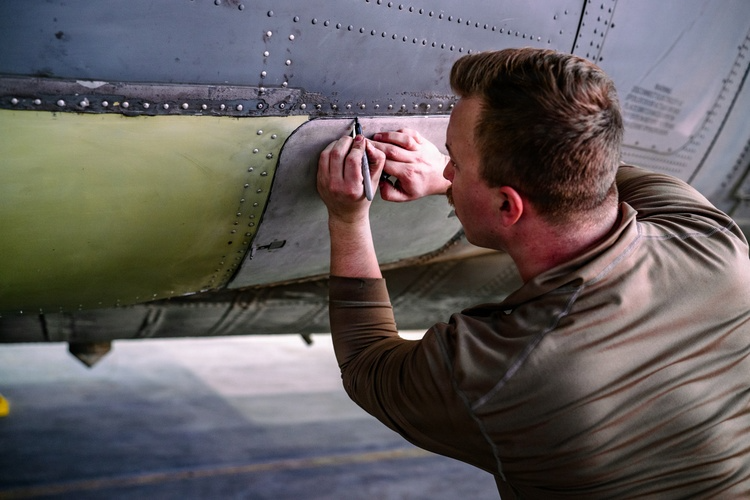
A CPC is a heavy-duty coating that's very low in solvent content, basically a coating that combines some form of active ingredients to prevent corrosion (like phosphates or molybdates) with a barrier that prevents moisture and oxygen from getting through (like polymers or wax matrices), and some bits that are especially resistant to corrosion (such as zinc chromate or TiO₂).
Unlike regular paint, a CPC is designed to remain flexible, not crack, and to resist corrosion immediately. This makes them ideal for the harsh environments found in aviation.
How CPCs Work: The Protection Game
- Chemical Inhibition - When those inhibitor molecules bond with the metal surface, they create a protective film that blocks the electrochemical reactions that cause corrosion.
- Physical Barrier - And the polymer or wax bit forms a solid layer on the surface that stops moisture and oxygen from getting in.
- Synergy with Cathodic Protection - When used in conjunction with sacrificial anodes, CPCs work together to enhance corrosion resistance by reducing the current that would otherwise weaken the metal.
Together, all this provides protection that'll last and last, even through temperature changes and exposure to that nasty de-icing solution.
Types of CPCs Used in Aviation - The Main Players
CPC Type Typical Make-Up Where You'll Find Them
- Water-based CPCs
Heavy water is mixed with acrylic or epoxy resin, inhibitors, and additives, and used on components such as internal panels and cabin structures in aircraft. - Solvent-based CPCs
Thick paint, like alkyd or polyurethane, with a lot of volatile solvents. You'll find them on the outside of the aircraft, like on the skin of the wings or the leading edge. - Wax-based CPCs
A special type of wax mixed with inhibitors is used for applications such as landing gear wells and wheel wells. - Nanocomposite CPCs
Polymers with nanoparticles like nano-silica or graphene for extra strength. And they're suitable for high-stress areas and even composite parts.
Each one has its own strengths and weaknesses and is suited to different parts of the aircraft.
Product Spotlight: Zip-Chem COR‑BAN 35
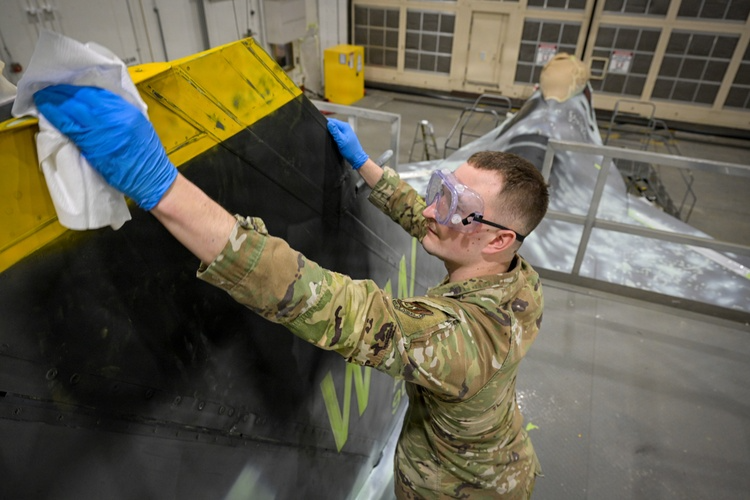
We carry Zip-Chem COR-BAN 35 and distribute it directly to federal and military consumers through GSA Advantage, so you get a guaranteed price with no hassle. We currently sell it in packs of ten 12-oz aerosol cans.
Key Benefits (from the TDS)
- Non‑cracking and non‑flaking down to –40 °F (–40 °C)
- Low VOC (395 g/L) and free of chromates, heavy metals, and high toxicity
- High solids (> 51 %) for rapid film build‑up
- Very low dry‑film weight (< 1 mil / 25 µm) yet exceeds specification
- 2000 hours salt‑spray resistance
- Fast drying (tack‑free < 1 h, dry through 72 h)
- Water‑displacing, high penetration, thixotropic, non‑sagging film
Physical Properties
- Flash point: 115 °F (46 °C)
- Specific gravity: 0.90
- Non‑volatile content: ≥ 51 %
- Operating temperature range: –65 °F (–54 °C) to 350 °F (177 °C)
- Color: Transparent reddish‑pink
Application Specs
- Apply with airless/air‑operated spray equipment, or use an aerosol.
- Wet film thickness: 1 – 1.5 mil (25‑38 µm); dry film thickness: 0.5‑0.75 mil (12‑19 µm).
- Coverage: 1 aerosol can ≈ 95 ft² (8.8 m²); 1 gal (3.8 L) ≈ 1600 ft² (149 m²).
- Cured film is removable with Sur‑Prep 3160/3167 or Zip‑Strip 125M.
Available Pack Sizes
- 12 fl oz (473 mL) aerosol – case of 12 (SKU 004675)
- 8 oz (227 g) brush‑in‑cap – case of 12 (SKU 010884)
- Quart (946 mL) – case of 12 (SKU 009408)
- Gallon (3.8 L) – case of 4 (SKU 009409)
- 5 gal (18.9 L) pail – SKU 002104
- 55 gal (208 L) drum – SKU 002105
While we only stock the hyperlinked 12 fluid oz. aerosol case of 12, we can source the other SKUs upon request. Please contact us at gsasales@greenwood.aero or call 580-865-6000 / 833-GSA-EBUY (833-472-3289), and we will help you source these products.
Selecting the Right CPC for a Specific Application
There are a few factors to consider when you choose a CPC. There is no one-size-fits-all corrosion-prohibiting compound, so selecting the right corrosion inhibitors depends on a few factors:
- Material compatibility: aluminum alloys, titanium, steel, and composites each respond differently.
- Environmental exposure: high humidity environments (Columbus AFB, NAS Pensacola, etc), salt spray, and de-icing fluids, and temperature extremes dictate the correct CPC for a given mission, location, or airframe.
- Regulatory requirements: Any MIL-SPEC, civil authority, or manufacturer specifications are met.
- Finally, performance criteria: these are the desired corrosion‑rate reduction, durability, and re‑coatability, all of which are typically expressed in the manufacturer’s TDS.
Benefits of Using CPCs in Aviation Maintenance
There are just a few significant benefits of employing CPCs in every aircraft maintenance program.
The first is the extended service life of aircraft systems and subsystems. Protective films dramatically slow corrosion, delaying major repairs or replacements. This directly reduces downtime; corrosion is a leading cause of unscheduled maintenance and costly repairs. Less of this results in higher MC rates and greater fleet availability.
Also, modern CPCs are low-VOC, chromate-free formulations that are much more environmentally friendly and much safer for maintainers.

Parting Thoughts on Procuring Zip-Chem CPCs
Greenwood Aerospace is a leader in government procurement for aviation parts, spares, and consumables, including Zip-Chem products. We use GSA Advantage to give you the easy button for buying CPCs for your maintenance team.
All prices are fixed with no haggling, no lengthy negotiations.
You can contact Greenwood Aerospace at gsasales@greenwood.aero, call us at 580-865-6000, or 833-GSA-EBUY (833-472-3289).
We are a proudly Native American-owned, HUBZone-certified small business committed to delivering high-quality service with rapid, reliable delivery.
Suggested Further Reading / References
We suggest you take a look at these regulatory and industry specification manuals to gain a deeper upstanding
.svg)