
.png)
B&B Specialties MS246 Screws: Military-Standard Precision Fasteners for Aircraft
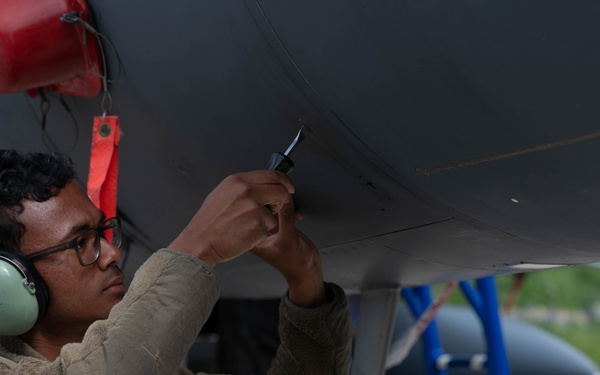
Continuing our series of articles on aircraft-grade hardware, we are covering MS-246 series machine screws from B&B Specialties. Machine screws are among the primary fasteners commonly used across aircraft for a wide range of purposes, namely to secure panels opened for inspection or maintenance.
B&B Specialties is a well-known manufacturer of aircraft hardware and has been in business for over fifty years. Let’s take a look at some of their products, produced and distributed by Greenwood Aerospace!
And if you are ready to buy, check out our quick-buy table below and go straight to the listing.
What Are MS246-Series Screws?
While B&B Fasteners does not explicitly designate an MS246 series of fasteners, all of the fasteners we offer are in this “series,” starting with a prefix of MS246.
What is the MS (Military Standard) Designation?
In military and aerospace hardware specifications, the MS (Military Standard) designation indicates that the fastener was developed under a formal US military standardization program. MS specs define exact requirements for dimensions, materials, head geometry, threads, tolerances, and finishes to ensure consistency across manufacturers and long life in harsh environments. Many MS specs were written decades ago, but still are the authoritative reference for aircraft hardware that must meet performance, interchangeability, and safety requirements.
MS specs are different in scope and intent from commercial fastener specs. Commercial screws are designed to meet general industrial needs with broader tolerances and less documentation. Military standard screws are controlled to tighter dimensional limits, verified material composition and defined performance criteria. This is critical in aviation, where fasteners are not interchangeable commodities but structural components that affect load paths, fatigue life, and airworthiness.

Even with the introduction of new specs like NASM, MS hardware is still specified throughout aerospace maintenance, repair, and overhaul environments. Many aircraft type certificates, structural repair manuals, and illustrated parts catalogs still reference MS fasteners. Using MS-designated hardware ensures compatibility with legacy documentation, simplifies configuration control, and avoids unapproved substitutions. So MS screws continue to play a role alongside new specs rather than being replaced outright.
Where MS246 Screws Fit in Military Standard Screws
The MS246 screw family is a long-established series of military-standard screws used for precision fastening in aircraft structures and systems. They are specified where the head geometry, countersink angles, and installation characteristics must be consistent. Within the broader category of military-standard screws, MS246 fasteners are often used for flush installations and structural alignment in aircraft assemblies.
Typical MS246 screws are made from aerospace-approved materials and finished to resist corrosion and environmental exposure. Dimensional controls are tightly controlled to ensure repeatable fit across different production lots and manufacturers, which is critical for both initial assembly and long-term sustainment. These characteristics make MS246 screws suitable for use in aircraft hardware where reliability and interchangeability are required rather than optional.
MS246 screws are found on both legacy and modern aircraft. Older airframes specify MS246 hardware directly in the original design data. At the same time, newer platforms continue to use these screws because of their proven performance and widespread availability in the military and government supply chain. In both cases, MS246 screws support consistent maintenance practices, reduce procurement complexity, and help maintain compliance with approved engineering data throughout an aircraft’s life.
Head Styles and Geometry: Why Configuration Matters
Fastener head types in aircraft hardware directly influence load transfer, installation integrity, and surface continuity. Pan-head, flat-head, and countersunk screws each serve a distinct role in aerospace assemblies, and selecting properly is paramount for structural performance and long-term airworthiness.
Pan Head vs Flat Head vs Countersunk Screws
Pan head screws are common when flushness is not required, and the head can sit on the surface without interfering with any adjacent airflow components. The rounded profile provides easier visual inspections and is more common in interior structures, brackets, and equipment mounting locations.
Flat-head screws, on the other hand, are designed to sit recessed within a countersunk hole to create a flush or nearly flush surface when installed correctly. This is most common where surface continuity is mandatory.
Why 100° Countersink Is Common in Aerospace
The 100° countersink is used in aerospace applications because it’s better suited for thin aircraft skins and lightweight structural materials than the 82° countersink found in commercial and industrial fasteners. An 82° countersink concentrates the load over a smaller area, which can increase localized stress and material deformation in thin aluminum or composite structures. A 100° countersink spreads the load over a larger area, reducing stress concentrations and improving fatigue life.
From a structural standpoint, the wider engagement of a 100° countersunk fastener helps to maintain joint integrity under vibration and cyclic loading, which are constant in aircraft operation. This is especially important in primary and secondary structures, where repeated loading cycles can cause cracking or fastener loosening if stresses are not properly managed.
A Closer Look at Key MS246-Series Variants
MS24671 Screws: General-Purpose Precision Hardware
Offered in several lengths (see our buying matrix above), the MS24671 screws are standard flat head screw that are widely used to secure panels on aircraft and other removable fairings.
MS24693 Screws: Flat Head, Corrosion-Resistant Machine Screws
Another flat head screw, the MS26493 screws are made for common fastening duties where a rivet is not viable because the surface needs to be routinely removed. Not with the frequency that something like a Tridair fastener would be used, but on panels that are removed for regular inspection cycles (100-hour, 300-hour, etc.).
These stainless steel fasteners resist corrosion and are a staple of bench stocks at every military maintenance supply point.
Packaging, Stocking, and GSA Procurement Strategy
We help you and your warfighting team procure B&B Fastener screws in bulk so that you can supply your bench stocks in a variety of settings, from flight line COSO points to phase maintenance supply stations, and even depot-level teams who will go through thousands and thousands of these units.
With packages ranging from 200 to 1,000 units, we have what your maintenance teams need.
Final Thoughts: Specifying MS246-Series Screws with Confidence
Each type of fastener performs a unique function. Pan head screws are a good option for interior sections where aerodynamic considerations are not a factor, and ease of access is important.
Flat head screws are the fastener of choice for exterior applications when aerodynamics are important. Always make sure to consult the illustrated parts breakdown for the correct part numbers, and if you are ready to place an order, just click the link below to get started!
.svg)

.jpg)


