
Royco Aviation Maintenance Fluids & Chemicals: A Procurement and Application Guide
Underneath the flashy skin and paint on military aircraft is an industrial machine, much like any other machinery on the planet. Just because it flies through the air does not mean that it is inherently much different than any other industrial machinery.
Aircraft rely heavily on major electrical systems, hydraulic systems, and turbine propulsion. In turn, these systems all rely heavily on the correct fluids for optimal operation. Royco, part of the Lanxess brand of products, is one of the frontrunners in industrial aviation lubrications, and Greenwood Aerospace is your preferred provider of Royco lubricants. We carry a wide selection of the Royco catalog, and our GSA Schedule contract lets you source them quickly and easily on GSA Advantage.
Let’s take a look at why Royco is a household name and how you can stock the lubricants you need through GSA Advantage!
Why Aviation Fluids and Chemicals Matter for Maintenance
Chemicals and lubricants are used on most major systems of every aircraft, so getting them right and having plenty on hand is extremely important. As in, important enough that logistical issues with fluids and chemicals bring flight operations to a halt.
Of course, it is more than just having fluids and lubricants; it has to be the right ones. For instance, there are a couple of broad types of hydraulic fluids that are specified in different Military Performance standards (MIL-PRFs).
MIL-PRF-83282 is for fire-resistant hydraulic fluids, while MIL-PRF-5606 is a legacy, mineral-based hydraulic fluid. Both are currently in production and in circulation because many legacy airframes in the U.S. military still rely on MIL-PRF-5606 for hydraulic systems.
ds, so using the right lubricants is absolutely critical for efficient and safe operation. The wrong chemical can destroy a system or, at the very least, waste a lot of time and materials by requiring purging and replacement with the correct fluid.
Major Aviation Maintenance Fluid and Chemical Categories
There are a few broad categories of fluids and chemicals that are widely used in all aircraft operations and, subsequently, in maintenance.
- Lubricants: Essential for reducing friction and wear on moving parts, ensuring smooth operation and the longevity of aircraft components. The lubricants and fluids listed here are commonly used in aircraft maintenance because they are specified in safety guidelines and operational procedures. These are both oils and greases.
- Hydraulic fluids: Used in systems that control landing gear, brakes, and flight controls, hydraulic fluids must meet strict performance and safety standards. Hydraulic fluid does more than transfer energy; it also serves as a heat sink and a lubricant. It is also a cleaning agent that is used to flush systems after a component has failed and been replaced.
- Cleaning agents: Specialized chemicals are required to remove contaminants, prevent corrosion, and maintain the integrity of sensitive aircraft surfaces.
Not only do these play a separate role in keeping aircraft in peak operating condition, but they are also multi-role lubricants: turbine engine oil is used in propellers, accessory drive systems, and electrical generators. Hydraulic fluid is also used in shock struts and other landing gear components that are not connected to the hydraulic systems.

Hydraulic Fluids for Aircraft Systems
Hydraulic systems are fairly simple in theory, but not necessarily in practice. Hydraulic fluid is under pressure, and when it is pushed in a certain direction, it transfers energy or force to perform the task it is intended to do.
For instance, when you push down the landing gear, the system initiates a sequence of events that transfer pressurized fluid to open the gear doors, lower the landing gear assemblies, and eventually actuate the brakes.
The fluid is under high pressure (3,000-4,000 psi), generating significant heat. The large reservoirs dissipate heat as the fluid is continuously circulated through the system and back into the reservoirs.
Mineral-based hydraulic fluids have been used for decades in aircraft systems, demonstrating proven reliability in demanding environments. These mineral-based oils are derived from crude oil, ensuring suitability and consistent performance in aviation applications. MIL-PRF-5606 is a widely used performance standard for mineral-based fluids, and Royco 756 (mineral-based) is incompatible with phosphate-ester fluids such as Skydrol. Mineral-oil-based hydraulic fluids are the most common in aircraft hydraulics, especially in military fleets composed mainly of older aircraft.
Turbine Engine Oils
Turbine engine oils are the lifeblood of the turbine engine and related systems. Turbine engines have relatively few moving parts, but those they have are under immense stress and heat.
Like hydraulic fluids, turbine engine oils are heat-transfer devices and are among the primary means of keeping the engine and other components they lubricate cool.
➡️ Links to: Understanding MIL-PRF-23699 Turbine Engine Oils
Lubricants and Greases for Wear Reduction and Assembly
Grease is the lubricant that keeps major components moving without binding.
More than one jet has had to dump fuel and return to base with a landing gear that would not retract, only to find it needed only greasing.
Greases are a simple substance that keep aircraft in the air, literally.
Why Aircraft Maintenance Needs Approved Solvents and Cleaners
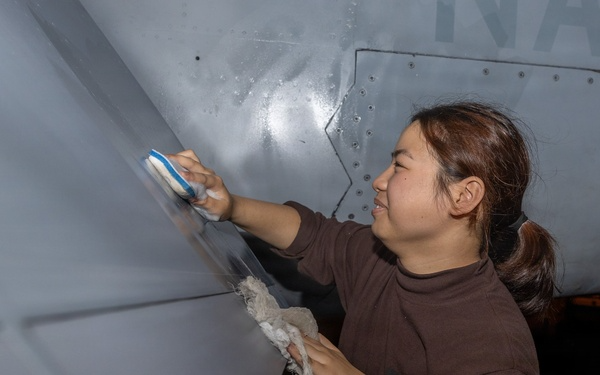
Aircraft maintenance relies on approved solvents and cleaning agents because the wrong chemicals can compromise structure, system reliability, and technician safety. General industrial cleaners won’t cut it. Aviation-approved products are tested to ensure compatibility with aircraft metals, composites, elastomers, wiring insulation, and protective coatings.
Maintenance personnel work with degreasers, solvents, and cleaning fluids to remove oils, hydraulic residue, carbon deposits, and environmental contaminants. Using approved formulations manages health risks, reduces hazardous exposure and meets OEM maintenance manuals, military specs and regulatory guidance.
Cleaning Without Damaging Materials or Coatings
Aviation cleaning is a balancing act between contamination removal and material preservation. Aircraft components have aluminum alloys, magnesium, titanium, composites, sealants, and surface treatments that can be damaged by aggressive or incompatible chemicals.
Approved cleaners dissolve grease, fuel residue, and particulate contamination without stripping primers, attacking sealants, or embrittlement of plastics and rubber components.
Cleaners in Pre-Maintenance and Inspection
Cleaners play a foundational role in preparing aircraft systems for inspection, repair, and reassembly. Proper cleaning allows technicians to see cracks, leaks, corrosion, and wear that may be hidden under dirt or residue. In structural and mechanical maintenance, clean surfaces are essential for non-destructive inspection methods, sealant adhesion, and torque application.
Continuous Innovation in Maintenance Chemicals
Aviation cleaning agents are continually improving safety, environmental performance, and operational efficiency. Modern formulations are reducing toxicity and VOC emissions while improving biodegradability, all while maintaining cleaning effectiveness.
These advancements help maintenance organizations meet evolving environmental regulations without sacrificing performance. As aircraft materials and coatings evolve, approved solvents and cleaners will be critical to extending aircraft life, reducing maintenance errors, and ensuring safe flight operations.
Common Chemical Properties and Performance Requirements
Let’s take a look at why there are performance requirements and how chemical properties play into these.
Anti-Corrosion Additives and Anti-Wear Chemistry
Industrial chemicals, in this case aviation and aerospace chemicals, are designed and made with specialized additive packages to protect the most sensitive (and expensive) components from corrosion, wear, and chemical degradation.
Anti-corrosion additives form protective layers (or films) on metal surfaces that reduce oxidation and prevent moisture-driven damage when and where aircraft are exposed to humidity, salt air, fuel vapor, and temperature cycling.
Friction Reduction and Protection Under High Pressure and Heat
Aircraft systems operate over a wide temperature and pressure range, from cold-soaked at altitude to hot thermal loads in engines, gearboxes, and auxiliaries. Aviation chemicals are designed to maintain a stable lubricating film under these extremes, reducing friction even under high pressure or high shear.
This is critical to protect bearings, actuators, and moving parts from scoring, galling, or seizing. Many aviation-approved fluids also resist thermal breakdown, preventing varnish formation and deposit buildup that can degrade system performance over time.
Engineered for Aviation Environments
Aviation maintenance chemicals are not general-purpose industrial products. They are designed for the operational realities of aircraft. These environments include rapid temperature changes, long service intervals, exposure to fuels and hydraulic fluids, and weight and reliability requirements.
Many Royco aviation maintenance fluids are known for their high-temperature performance and cold-weather flow and protection. This balanced performance makes them ideal for aerospace applications where both thermal stability and low temperature operability are required.
Why Aviation Chemicals are Different from Commercial or Industrial Products
Aviation chemicals are fundamentally different from commercial or industrial products because they must meet aerospace standards and certification requirements. These products are tested for material compatibility, long-term stability, and predictable performance under flight-related stresses that exceed industrial operating conditions. These have to perform under high-load conditions, with an approved molecular structure. Oil and lubricants that reduce wear on aircraft engines with extreme pressure performance are always in high demand.
Aerospace lubricants and maintenance fluids are designed to perform reliably over extended intervals with minimal variation. This level of control helps maintenance organizations meet OEM specifications, military standards, and regulatory guidance while supporting the aircraft's safety, durability, and airworthiness.
Safety Considerations for Chemical Handling
Always check the Safety Data Sheets before handling any chemicals for the first time; even similar-looking chemicals have their own risk profiles.
Manufacturers are required to provide this information in the SDS, and all aircraft maintenance operations that use chemicals are also required to keep the SDS for chemicals in use available. So, read them. Get to know them.

Compliance, Compatibility, and Risk Management
The entire aviation and aerospace industry is one of the most heavily regulated industries on earth. There is nothing left to chance, and every aspect of aviation is rigorously scrutinized, from supply chains to maintenance, and of course, flight operations.
Unlike general-purpose products, aviation-approved chemicals are evaluated against OEM specifications.
Packaging, Storage, and Stocking Strategies
The optimal performance of critical components is always the primary consideration in the aviation industry. But there is much more to the story than reliable performance; aircraft maintenance relies heavily on a strong supply chain and logistics.
Royco products are built and packaged in a wide range of packaging options and storage types because not all operations are the same.
Take turbine oil. For the CFM-56, used on the KC-135, E-6B, and C-40 fleets, turbine oil is serviced directly from the can into the filler port. On the other hand, most tactical aircraft are serviced from a cart into the engine reservoir.

While bulk quart cans make sense for one application, 55-gallon drums work better for another.
You need to know your mission profile and which quantities and formats work for it.
Procurement Considerations for Aviation and Government Buyers
Procurement decisions have to meet a host of requirements. It starts with quality, consistent results, and compliance over price alone, but there are other procurement requirements, as well.
Greenwood Aerospace is a HUBZone-certified, Native American-owned small business, and we have been in business for over forty years, serving the warfighter community and federal agencies. We carry dozens of Royco products and are on the GSA Schedule, available on GSA Advantage.
Ready to buy? Look no further.
Greenwood Aerospace Supports Safe, Reliable, and Efficient Aviation Maintenance
The demand for aircraft consumable products, including oils, greases, industrial lubricants, hydraulic fluid, and cleaners, will always be there, and Greenwood Aerospace continues to be your go-to source for them in aircraft sustainment.
Our catalog of products includes many of the products in the Royco catalog, and when you source them through GSA Advantage, you get the added benefit of knowing the price is guaranteed with no haggling, no further negotiating, just click the buy button and know it will be reliably delivered.
Greenwood Aerospace partners with prime defense contractors on military export programs. We are ITAR-registered and AS9120B-certified.
Compliance & Registration:
Cage Code: 2Y735
UEI: KVSUYYSJS174
DUNS: 604006874
NAICS Codes: 488190, 336413, 332722, 336411, 336413, 481212, 532411
Large orders or expedited delivery? Call 580-865-6000, 833-GSA-EBUY (833-472-3289) or gsasales@greenwood.aero.
.svg)

.jpg)


