
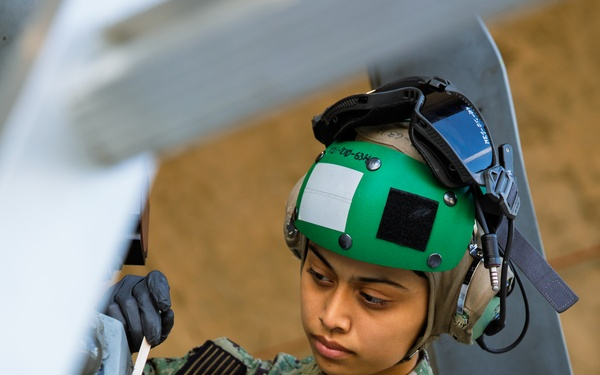
The GSA Advantage Guide to Electrically Conductive Sealants for Lightning Protection
This is Part 1 of our comprehensive 4-part series on electrically conductive and lightning strike sealants for federal procurement. This hub article provides a complete overview of PPG's Class B conductive sealants available through GSA Advantage.
There are approximately 100 lightning strikes per second across the world, and some of those strike airplanes. When they do, there is often little to no damage, since commercial and military aircraft are among the most well-insulated electrically on the planet. They are made to survive lightning strikes and continue on with the mission, but that does not mean that the lightning strike leaves no mark.
When they do strike an aircraft, an inspection is automatically ordered and conducted, and assuming there is no structural damage, it is returned to flying status. But sometimes there is minor damage, and it has to be sealed. Or you need electrically conductive sealants for another area of the aircraft. When these needs arise, we have you covered.
Let’s take a look at these PPG products, what they do, and how you can source them.
Buy PPG Aerospace Conductive Sealants
If you know what you need and are ready to buy it now, check out our products in this table, click the hyperlink, and get started. If you have any questions about bulk orders, delivery times, or general inquiries, you can contact us at gsasales@greenwood.aero or call us at 580-865-6000 or 833-GSA-EBUY (833-472-3289).
Executive Summary: Electrically Conductive Lightning Strike Sealants for Federal Procurement
When defense organizations and federal aviation operators specify sealants for aircraft applications, electrical continuity protection is not an optional item when it is specified in the MIL PRF or OEM.
Electrically conductive sealants serve dual purposes:
- They create weathertight seals while
- They maintain electrical pathways for EMI shielding and lightning-protection.
What Are Electrically Conductive Sealants?
Electrically conductive sealants are unique two-part compounds that provide electrical continuity and corrosion protection in the harshest aerospace environments. Unlike general-purpose sealants, these materials contain special electrically conductive additives: PR-2200 uses nickel, PS-872 uses aluminum, and PR-1764 is a manganese dioxide-cured compound that allows electricity to keep flowing through the sealed gap even after the sealant has dried.
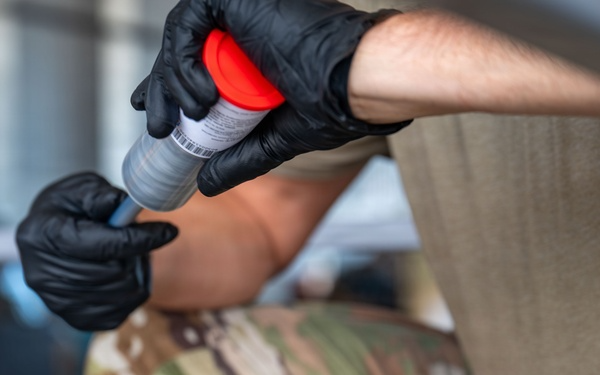
The uncured material starts as a thick paste that does not tend to run or sag, making it easy to apply to vertical surfaces or into tight gaps with either a gun or a spatula. Because of this texture, technicians can get a consistent seal across vertical surfaces and gaps, which is especially important in lap joints and fay surfaces where you really need the sealant to stick in just the right spot.
Once fully cured, these versatile sealants put up a pretty good fight against the most common causes of corrosion on aluminum or in areas where different metals rub together. These are also preventive measures against galvanic corrosion, which is common between dissimilar metals and a major corrosion threat to aluminum alloys.
Why Military Maintenance Procurement Officials Need Specialized Conductive Lightning Strike Sealants
Federal facilities and military aircraft face unique electromagnetic environments where EMI/RFI shielding effectiveness determines operational capability. Lightning strike protection requirements for certain aircraft applications demand that cured sealant maintain electrical continuity even in highly torqued fay surfaces subjected to vibration and thermal cycling. The cured material must resist prolonged exposure to both jet fuel and aviation gas while maintaining electrical contact resistance below specified thresholds.
Compliance with military specifications drives material selection for government procurement. PR-2200 meets rapid-cure requirements with an application life as short as one hour, critical for production schedules. PR-1764 offers a chromate-free formulation for environmental compliance while maintaining a service temperature range from -42°C to 130°C. PS-872 provides an aluminum-filled composition specifically engineered for conductive lightning strike applications in highly torqued assemblies
Key Product Categories: PR-2200, PR-1764, and PS-872 Class B Sealants
PR-2200 Class B is the quick-cure option in electrically conductive sealant technology. This stuff - a nickel-filled, epoxy-cured polythioether compound that sets so fast it's dry to the touch in under 5 hours and is at 30 Shore A durometer in just 6 hours at room temperature. Its temperature range is pretty broad - down to -67°F and up to 250°F, with some wiggle room for occasional temperatures up to 360°F.
And to top it all off, it only has 0.16 ohms of electrical contact resistance. Then, to put it through its paces, it still has a volume resistivity of 0.20 ohm-cm even after getting dunked in fuel, and no corrosion or change in conductivity after 2,000 hours in the salt spray test.
PR-1764 M Class B comes with a manganese dioxide-cured, liquid polysulfide compound that's been formulated to be chromate and aromatic-free. This one's got a bit more working time - 2 hours to apply, and 48 hours to fully cure to 30 Shore A, helpful if you have complex assemblies to finish. And good news: its electrical contact resistance stays pretty low (under 12 ohm-cm) even when it's been exposed to the elements; 1,000 hours at 35°C in water and 2,000 hours at 80°C in dry air, and it still holds up. Plus, it adheres to aircraft parts made of aluminum alloys, composites, and titanium, provided you use a bit of our PR-148 AF adhesion promoter.
PS-872 Class B is excellent for conductive lightning strike sealant on tightly torqued faying surfaces. This material - an aluminum-filled, manganese dioxide-cured polysulfide compound - can operate in temperatures ranging from -67°F to 250°F, with intermittent excursions to 275°F. You've also got 2 hours of application time and 36 hours until it is dry to the touch. And as a bonus, it passes the test with flying colors, with a 100% cohesive failure at 27 pli peel strength on stainless steel, titanium, and alclad, even after a fuel dunk.
Lightning Strike Protection Requirements Using Conductive Sealants
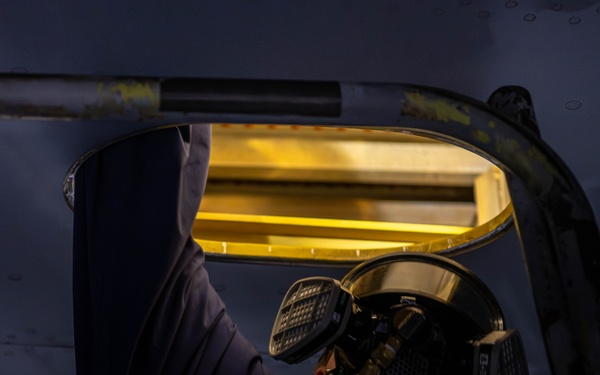
It does not take much imagination to understand why lightning-strike sealants are important and why the specific requirements must be met.
Electrical continuity requirements define a core, fundamental selection criterion. PR-2200 has an electrical contact resistance of 0.16 ohms, making it ideal for EMI/RFI shielding that demands maximum conductivity. PS-872's aluminum-filled formulation maintains conductivity specifically in highly torqued fay surfaces where mechanical stress could compromise other materials. PR-1764's <12 ohm-cm resistivity provides adequate conductivity for lightning strike protection while offering environmental compliance advantages.
Cure schedule compatibility with production timelines determines practical applicability. Rapid cure PR-2200 B-1/2 achieves handling strength in 3 hours, enabling same-shift assembly progression. Extended cure PS-872 B-2 requires 72 hours to reach 30 Shore A, necessitating longer fixturing times but providing extended application life for complex assemblies. PR-1764's 48-hour cure represents a middle ground suitable for most aircraft applications.
Environmental resistance to jet fuel and aviation gas remains non-negotiable for aerospace applications. All three Class B sealants demonstrate resistance to prolonged exposure to hydrocarbon fuels, with specific testing protocols verifying performance after immersion in Jet Reference Fuel (JRF). Galvanic compatibility between dissimilar metals requires corrosion-inhibitive properties that prevent electrochemical degradation at aluminum-to-titanium or aluminum-to-stainless steel interfaces.
Again, corrosion loves to take hold at dissimilar metals and other common aircraft substrates, so the right sealant is very important.
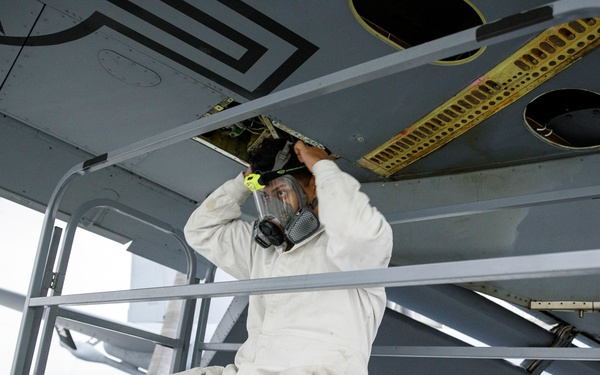
GSA Advantage for Federal Buyers of Corrosion Inhibitive Sealants
Greenwood Aerospace streamlines the buying process for electrically conductive sealants through its GSA Schedule 51V for authorized federal buyers. As a registered distributor with the Department of State for ITAR purposes and AS9120B-certified for quality management, Greenwood Aerospace is one of the top choices for aerospace and defence supplies. Our CAGE Code is 2Y735, and our DUNS number is 604006874.
By using pre-negotiated GSA prices, buyers can skip the bidding process altogether and get what they need much quicker - we're talking from months to just a few days. And because all of their GSA schedule products already meet TAA requirements, international procurement just got a whole lot simpler. As a Native American-owned small business that's certified as a HUBZone business and registered under all the right NAICS codes (488190, 336413, 332722, 336411, 336413, and 481212, as well as 532411), you can count on Greenwood Aerospace for rapid delivery and top-notch service.
You can get straight to what you need with direct links to GSA Advantage, meaning you can get hold of PR-2200, PR-1764, and PS-872 electrically conductive sealants right away.
Technical Resources and Compliance Documentation for Resilient Sealant Materials
We suggest that you go straight to the source and read the technical descriptions for each of these materials. To make it a little easier, we created this table:
Next Steps for Government Buyers: Selecting the Right Electrically Conductive Sealant
Federal procurement of Class B corrosion-inhibitive materials requires careful attention to detail, namely the MIL PRFs that stipulate their usage and what they do.
Greenwood Aerospace is AS9120B certified, so you have the peace of mind knowing that there is rigorous traceability, documentation, and quality controls across every step in the process.
Direct GSA Advantage Access:
PR-1764 Class B Electrically Conductive Sealants:
PR-2200 Class B Electrically Conductive Sealants:
PS-872 Class B Conductive Lightning Strike Sealants:
Final Thoughts
This article is the cornerstone of our discussion on electrically conductive and lightning-strike protective seelants. The three Class B sealants each offer different use cases and profiles, depending on the demand and needs.
Whichever you need, we have them ready to order on GSA Advantage. All approved parties can click the hyperlinks throughout this article and buy the products you need. No haggling, no red tape. This is the simple process you have always wished you could find in government procurement.
.svg)
.jpg)


